Vein sclerotherapy, also known as sclerotherapy, is a proven method for treating varicose veins and spider veins. During the procedure, a liquid or foam-based sclerosing agent is injected into the affected vein to cause the vein walls to stick together and close off the vein permanently. This therapy is particularly suitable for smaller varicose veins, superficial spider veins, and deeper sections of veins that can be treated gently. Optimal results can be achieved through proper aftercare, compression stockings, and careful selection of the sclerosing agent—often polidocanol in various concentrations. Since the procedure is performed on an outpatient basis and carries only minimal risks, it is one of the standard procedures used by phlebologists.
What are varicose veins?
Vein problems are a widespread phenomenon. Nearly one in two women suffers from varicose veins as they age. In medical terms, varicose veins are also known as varices. These are dilated veins that can spread out in a net-like pattern over time. In the early stages, varicose veins are commonly known as spider veins, which tend to develop in the backs of the knees or on the lower legs.
Strawberry veins, however, are not technically varicose veins. Rather, they are simply small vein branches that are visible beneath the skin as blue or purple networks. They can, however, be the first sign of dilation in the superficial leg veins (also called saphenous veins). The saphenous veins (Vena saphena magna and parva) lie slightly deeper in the tissue than the smaller spider veins and are therefore only visible once the dilation has significantly increased.
How do varicose veins develop?
The superficial leg veins, also known as saphenous veins, are located on the inner thigh (Vena saphena magna) and the back of the lower leg (Vena saphena parva), directly under the skin or in the subcutaneous fatty tissue. Due to upright posture and the effects of gravity, these veins are under particular strain. Blood can, so to speak, pool here, causing the venous valves within the vein to leak. Under normal conditions, the venous valves—which are present at intervals of a few centimeters throughout the saphenous vein—prevent blood from flowing downward under the influence of gravity. They essentially allow blood to flow only from the bottom upward, not in the opposite direction.
Since connective tissue becomes more lax in women during pregnancy, they suffer from varicose veins significantly more often than men. However, standing or sitting for long periods also puts strain on the superficial veins and increases the risk of developing varicose veins.
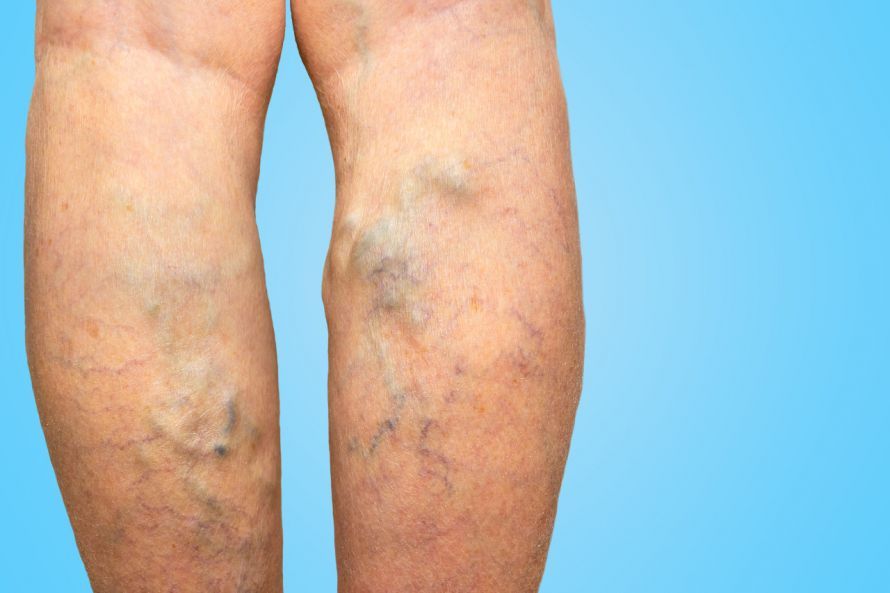
Patients with varicose veins should move around frequently @ Solarisys /AdobeStock
What symptoms do varicose veins cause?
As mentioned above, spider veins can sometimes be the first signs of varicose veins. Other typical symptoms, which occur especially in the evening, include:
- swelling of the legs and ankles
- tired and heavy legs
- Pain (especially after standing or sitting for long periods)
Other, though much rarer, symptoms may include open sores on the inner ankles that do not heal or heal only very slowly. This is caused by impaired blood flow and, in particular, the poor removal of metabolic waste products, which in turn leads to an enlargement of the wound or a delay in healing.
Do varicose veins always need to be treated?
Varicose veins that do not cause any problems do not necessarily need to be treated. However, varicose veins never resolve on their own and, in the worst case, can worsen and eventually lead to serious problems such as non-healing wounds on the lower leg (ulcer). For this reason, it is recommended that every patient with varicose veins wear compression stockings. This is particularly advisable during situations that place strain on the legs, such as prolonged standing or sitting.
Overview of the Different Forms of Sclerotherapy
Various forms of sclerotherapy are available for the treatment of varicose veins and spider veins, which are used depending on the severity of the affected veins. Traditional liquid sclerotherapy uses a liquid sclerosing agent such as polidocanol, which is injected into smaller veins or spider veins, where it triggers a controlled inflammatory reaction that causes the vein walls to adhere to one another. For larger or deeper veins, foam sclerotherapy is suitable, in which the sclerosing agent is mixed with air to form a foam before injection. Due to its foamy consistency, the agent displaces blood more effectively, adheres to the vein wall for a longer period, and can achieve more effective sealing. In certain cases, sclerotherapy of larger sections of veins may also be appropriate, particularly when laser or radiofrequency procedures are not an option. All methods are performed on an outpatient basis and are considered minimally invasive treatments for varicose veins and spider veins. The key to optimal results is selecting the right method and consistently following a compression therapy regimen during post-treatment care.
What other options are available for treating varicose veins?
- Compression therapy using bandages or stockings: This applies external pressure to the veins, allowing the venous valves to close more effectively.
- So-called endoluminal therapy using laser or radiofrequency energy: In this procedure, special probes are inserted into the vein from the outside to treat the vein wall from the inside with heat, causing the vein walls to become irritated, inflamed, and ultimately to close by adhering to one another.
- Surgical removal of varicose veins (crossectomy and stripping): The principle behind surgical treatment is to ligate the superficial vein in the groin or behind the knee (crossectomy) and to completely remove it (stripping).
- Sclerotherapy: Here, too, inflammation and adhesion of the vein walls occur from the inside. Unlike laser and radiofrequency therapy, however, this is achieved using so-called sclerosing agents in liquid or foam form.
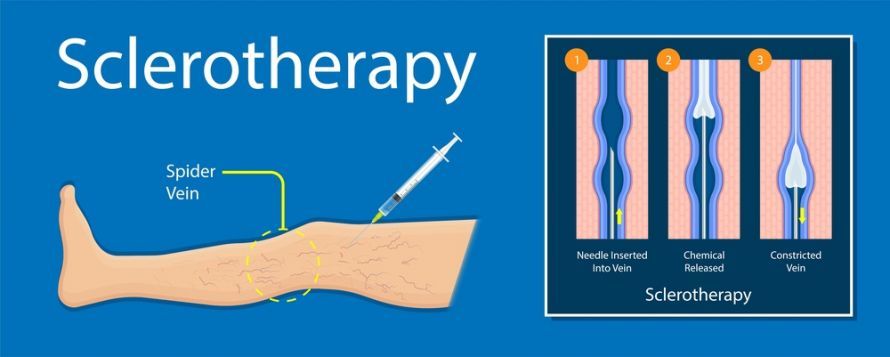
The sclerosing agent dissolves the cells of the inner vessel wall, and an inflammatory reaction causes the varicose veins to adhere @ Pepermpron /AdobeStock
What exactly happens during sclerotherapy?
During sclerotherapy, the sclerosing agent—usually polidocanol (Aethoxyskerol®, 0.25–3%)—is injected into the affected veins, which are then compressed from the outside. Ideally, the inflammatory reaction to polidocanol causes the vein walls to close off. For spider veins and smaller veins, this procedure (known as liquid sclerotherapy) is usually very effective.
In addition to the standard injection of liquid polidocanol, phlebology offers another method for successfully obliterating veins. This therapy is known as foam sclerotherapy. In foam sclerotherapy, the sclerosing agent is mixed with air before it is also injected under the skin. This is particularly recommended for veins with larger diameters to ensure economical use of the sclerosing agent while still effectively sealing the vein walls.
When is vein sclerotherapy performed?
Ultimately, it is always up to the patient and the treating physician to decide which of the above-mentioned treatment methods to choose. Sclerotherapy can be used successfully, particularly for smaller vessels (spider veins). For larger vessels, there is a significant risk that the vein will not seal completely, meaning the treatment was unsuccessful. In these cases, varicose vein stripping or laser or radiofrequency treatment should be preferred.
What happens before, during, and after sclerotherapy?
The procedure is usually performed while the patient is lying down. The dose of the sclerosing agent depends on the patient’s body weight. First, the injection site is carefully disinfected before the treating physician injects a tiny amount of air under the skin to displace the blood. The liquid sclerosing agent is then injected into the vein. However, the doctor must take care not to inject the medication into the surrounding tissue.
Foam sclerotherapy works in a similar way. However, the doctor mixes the medication with air before the treatment begins, before injecting the sclerosing agent into the vein. The blood is also displaced by the foamy consistency of the agent, allowing the medication to take effect. After sclerotherapy, the injection site is covered with a cotton pad. The patient must then wear compression stockings, which apply even pressure to the tissue.
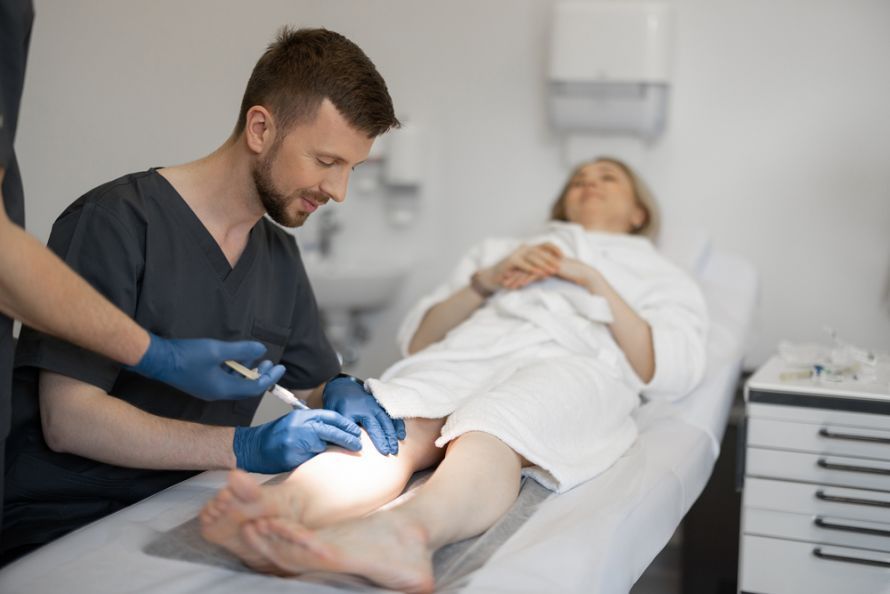
In sclerotherapy, the doctor treats the patient by injecting foam or a liquid sclerosing agent, such as polidocanol @ rh2010 /AdobeStock
What complications can occur with sclerotherapy?
Although sclerotherapy is one of the standard treatments for pathologically altered vessels, the procedure is associated with certain risks.
The most common complications include:
- Inflammation
- Infections
- Bleeding due to damage to blood vessels
- Skin discoloration
- Irreparable nerve damage
- Wound-healing disorders
- Allergic reactions caused by sclerosing agents
- Fluid retention
- Blood clot formation
What should be kept in mind after sclerotherapy?
Minor swelling, skin redness, or skin discoloration (bruising) are completely normal after vein sclerotherapy. However, patients should see a doctor if they experience
- fever
- pain
- severe redness and swelling
- numbness or tingling in the legs and feet
- blue discoloration of the toes
.
To avoid the risk of infection, patients should refrain from sunbathing, saunas, and tanning beds while the wound is healing. Short showers are permitted, provided the injection site is covered with a bandage.
Exercise is extremely important after sclerotherapy to prevent spider veins and varicose veins. Patients must absolutely avoid standing or sitting for long periods of time. The legs should be elevated as often as possible; in addition, walking, Nordic walking, and jogging promote better blood circulation.
FAQs on Vein Sclerotherapy
How does sclerotherapy work for varicose veins and spider veins?
Sclerotherapy involves injecting a sclerosing agent into the affected vein, where it triggers a controlled inflammatory reaction. This causes the vein walls to adhere to one another, and over time, the vein transforms into a strand of connective tissue. This process is effective for both smaller varicose veins and spider veins, as well as certain larger or deeper varicose veins, provided that the specific sclerotherapy methods are appropriate. The goal is to redirect blood flow away from pathologically dilated veins and achieve optimal long-term results.
What happens immediately after treatment?
Immediately after treatment, the treated vein is compressed so that the blood within the vein is displaced and the sclerosing agent can work effectively. Mild bruising, temporary hardening, or a sensation of pressure at the treated veins often occur. These changes are common and usually subside on their own in the weeks following treatment. In the case of spider veins or varicose veins, small brownish discolorations may also appear, which in rare cases may persist for several weeks to months.
How many sessions are needed to achieve good results?
Depending on the severity of the varicose veins or spider veins, multiple sessions may be necessary. Smaller veins often respond well after just one session, while larger veins or deeper varicose veins require multiple treatments to achieve complete obliteration. The choice of procedure—liquid sclerosing agent or foam, which is prepared and processed beforehand—also influences the number of sessions.
What risks or side effects can occur?
The procedures are considered gentle and generally result in very few side effects. However, in rare cases, complications such as allergic reactions to the sclerosing agent, severe inflammation, superficial thrombosis, or significant swelling may occur. The goal of treatment is to minimize the risk of side effects and complications. Proper technique, precisely adjusted concentrations of the sclerosing agent, and appropriate compression therapy are crucial for this.
What should be considered during follow-up care?
Follow-up care is crucial for positively influencing the healing process. Patients should avoid direct sunlight on the treated areas during the first few days, as this can lead to pigmentation changes. Saunas and tanning beds should also be avoided initially. Exercise, regular walks, and elevating the legs support blood flow in the veins and promote healing. Compression stockings provide additional support to the treated veins. For larger varicose veins or those located deeper in the leg, consistent compression over weeks or months may be advisable.
When is sclerotherapy for varicose veins recommended?
Sclerotherapy is used when a vein is functionally impaired or cosmetically noticeable and other procedures are not absolutely necessary. For smaller varicose veins, spider veins, or varicose veins in the early stages, sclerotherapy is often very effective. In other cases, such as with larger varicose veins, sclerotherapy may be of limited benefit, so alternative procedures like laser or radiofrequency are recommended. Sclerotherapy is a method for treating varicose veins that is particularly suitable when the affected veins are not excessively dilated.

About the medical author
Prof. Dr. med. Susanne Regus
Medical Author
Prof. Dr. med. Susanne Regus – medical author: expert articles, professional insights and medical expertise in the Leading Medicine Guide.
More about the medical author →Sources
S2k-Leitlinie „Diagnostik und Therapie der Varikose“ (AWMF-Register-Nr. 037-018), Stand 26.07.2019: register.awmf.org/de/leitlinien/detail/037-018